Water damage in the Colorado mountains is not just inconvenient. It can quickly become a serious structural and health concern, especially in high-altitude communities like Breckenridge, Silverthorne, Dillon, Frisco, Keystone, Vail, and surrounding areas. Whether caused by frozen pipe bursts, appliance failures, roof leaks, or spring snowmelt intrusion, excess moisture demands immediate and professional attention.
Rocky Mountain Restore, based in Summit County, Colorado, provides residential and commercial water damage restoration throughout the region. One of the most important factors in successful restoration is the use of professional-grade water drying equipment. While surface water can be removed with basic tools, true structural drying requires specialized systems designed for mountain environments.
Below, we explain why professional water drying equipment matters and how it protects homes and businesses across Colorado’s high country.
Faster Water Removal in Mountain Climates
Mountain properties experience unique water damage challenges. High elevation, fluctuating temperatures, dense construction materials, and tightly sealed building envelopes all influence how moisture behaves indoors. In places like Breckenridge and Vail, where winter temperatures can plunge well below freezing, water damage often begins with frozen pipe bursts that release significant amounts of water quickly.
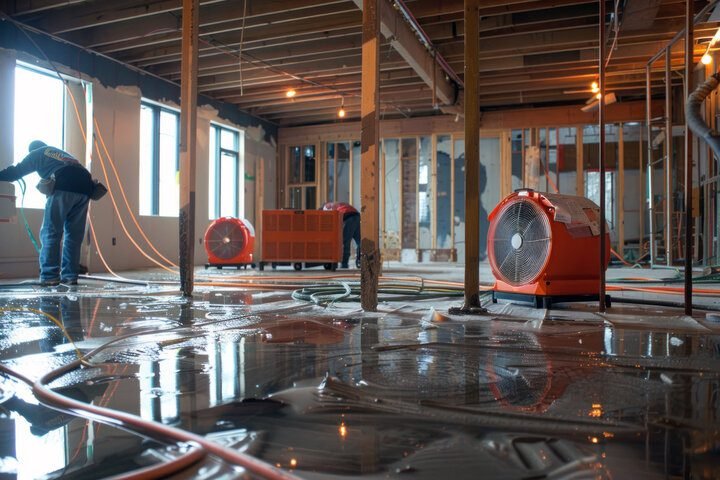
Professional drying equipment accelerates water removal by targeting both visible and hidden moisture. Industrial extractors, air movers, and dehumidifiers work together to reduce humidity levels and promote rapid evaporation.
Key advantages of professional water removal equipment include:
- High-capacity extraction from carpets, subfloors, and padding
- Commercial-grade air movers that circulate air efficiently
- Low-grain refrigerant or desiccant dehumidifiers for large spaces
- Moisture mapping tools that guide targeted drying
In high-altitude environments, standard household dehumidifiers simply cannot keep up. They lack the power and moisture removal capacity needed to dry saturated materials before secondary damage begins. Professional systems are designed to handle large volumes of water quickly, reducing drying times and minimizing disruption for homeowners and businesses.
Faster drying is not just about convenience. It directly impacts the structural integrity of your property. The longer materials remain wet, the more likely they are to swell, warp, delaminate, or deteriorate. Prompt action with the right equipment significantly lowers repair costs and long-term damage.
For commercial properties in Frisco or Silverthorne, faster drying also means reduced downtime. Businesses depend on rapid restoration to resume operations safely and efficiently. Professional equipment plays a central role in meeting that goal.
Stopping Mold Growth with Pro Equipment
In Summit County’s cool climate, many property owners assume mold growth is less likely. However, indoor mold thrives when moisture is trapped behind walls, under flooring, or inside insulation. Even in colder environments, mold can begin developing within 24 to 48 hours after water intrusion.
Professional drying equipment reduces that risk by aggressively controlling moisture levels.
Critical components of mold prevention include:
- Rapid humidity reduction below mold-supporting levels
- Continuous air circulation in affected zones
- HEPA-filtered air scrubbers when necessary
- Moisture meters to verify dryness before rebuild
Mold does not require visible standing water. Elevated humidity alone can create the right conditions for growth. After a water loss in Keystone or Dillon, for example, damp drywall cavities can remain wet long after surfaces appear dry.
Professional dehumidifiers extract moisture from both the air and structural materials. Air movers create airflow patterns that direct moisture toward dehumidification systems. Together, they create a controlled drying environment designed to prevent microbial growth.
Rocky Mountain Restore uses moisture detection tools to confirm that drying goals are achieved before repairs begin. This reduces the risk of hidden mold forming weeks or months after the initial event.
By stopping mold before it starts, professional water drying equipment protects:
- Indoor air quality
- Occupant health
- Structural materials
- Long-term property value
In mountain communities where homes are often used seasonally, undetected moisture can sit for extended periods. Professional drying helps ensure that when property owners return, they are not facing unexpected mold remediation needs.
Protecting Structures from Hidden Moisture
One of the biggest misconceptions about water damage is that once surfaces feel dry, the problem is resolved. In reality, moisture often travels into wall cavities, under hardwood flooring, beneath tile, and into substructures.
Hidden moisture can lead to:
- Warped framing and structural shifting
- Rusted fasteners and metal components
- Insulation breakdown
- Flooring adhesive failure
Professional drying equipment is paired with advanced detection technology. Infrared cameras, penetrating moisture meters, and hygrometers allow technicians to identify moisture that cannot be seen with the naked eye.
In Breckenridge homes, for example, radiant floor systems and complex building assemblies can trap moisture in unexpected areas. Without professional assessment and drying, water may remain in subfloor layers or behind vapor barriers.
Targeted drying techniques may include:
- Injectidry systems for wall cavities
- Floor mat drying systems for hardwood floors
- Controlled demolition when necessary
- Directed airflow inside structural assemblies
These methods are not achievable with consumer-grade fans or rental equipment. Professional systems are engineered to dry from the inside out, preserving as much of the original structure as possible.
For commercial buildings in Vail or Silverthorne, protecting structural components is especially important. Large properties with layered materials and mechanical systems require coordinated drying strategies to prevent long-term performance issues.
Hidden moisture is one of the leading causes of delayed structural damage. Professional equipment significantly reduces that risk.
Why DIY Drying Often Falls Short in Severe Water Damage
Many property owners initially attempt to handle water damage themselves. While minor spills can be managed with towels and household fans, severe water losses require far more advanced intervention.
Common DIY drying limitations include:
- Insufficient airflow and dehumidification capacity
- No professional moisture measurement tools
- Incomplete water extraction from padding or subfloors
- Limited ability to dry inside walls or ceilings
In mountain climates, DIY drying is even more challenging. Cold outdoor air does not necessarily translate into effective indoor drying conditions. In fact, opening windows during winter can create condensation issues that worsen moisture problems.
Rental equipment, while stronger than household devices, often lacks the performance required for significant water losses. Additionally, proper equipment placement and airflow balancing require training and experience.
DIY efforts frequently result in:
- Lingering odors
- Mold growth weeks later
- Structural warping
- Insurance claim complications
Rocky Mountain Restore works with property owners throughout Summit County to address water damage correctly the first time. Professional technicians understand psychrometrics, or the science of drying, and adjust equipment based on temperature, humidity, and material type.
Attempting to save money with DIY drying can ultimately increase repair costs if materials must later be removed due to hidden damage or mold contamination.
Faster Claims with Accurate Moisture Data
Insurance providers require documentation to support water damage claims. Professional water drying equipment is only part of the equation. Accurate moisture data and reporting are equally critical.
Professional restoration teams use:
- Daily moisture readings
- Thermal imaging documentation
- Drying logs and progress reports
- Industry-standard drying protocols
In Frisco or Dillon, when a pipe burst floods a finished basement, insurance adjusters need clear evidence of the extent of damage and the steps taken to mitigate it. Professional-grade moisture meters provide quantifiable data that supports claim processing.
This documentation benefits property owners by:
- Demonstrating proper mitigation efforts
- Supporting material replacement decisions
- Reducing disputes about drying sufficiency
- Accelerating claim resolution timelines
Rocky Mountain Restore coordinates with insurance providers while maintaining transparency with property owners. Thorough records ensure that both residential and commercial clients have the information needed to move forward confidently.
Faster drying combined with detailed reporting often leads to smoother claims experiences. In mountain communities where construction timelines can be impacted by weather and contractor availability, minimizing delays is especially valuable.
Choosing Equipment Built for High Altitude
High altitude affects drying performance. At elevations common in Breckenridge and throughout Summit County, air density and atmospheric pressure differ significantly from lower elevations. This directly impacts how moisture evaporates and how equipment performs.
Professional restoration companies select equipment designed or calibrated for mountain environments.
Important considerations include:
- Dehumidifier performance at lower air pressure
- Temperature control in cold structures
- Equipment transport across snowy terrain
- Power requirements in remote properties
Standard equipment may not operate at peak efficiency in high-elevation conditions. Professional systems account for these factors and are deployed strategically based on building size, material type, and moisture levels.
In communities such as Keystone and Vail, where properties range from luxury homes to large commercial lodges, scalable drying solutions are essential. Restoration professionals calculate the correct number of air movers and dehumidifiers to achieve optimal drying conditions.
Rocky Mountain Restore brings experience specific to Colorado’s mountain climate. Understanding how altitude, cold temperatures, and seasonal occupancy patterns affect drying allows for more precise and effective restoration.
Choosing equipment built for high altitude ensures:
- More consistent drying performance
- Reduced equipment strain and failure
- Faster moisture reduction
- Better protection of building materials
Water damage in mountain communities demands more than basic tools. It requires specialized knowledge and professional-grade drying systems designed for the environment.
Frequently Asked Questions
How quickly should water damage be addressed in Summit County homes?
Water damage should be addressed immediately, ideally within the first 24 hours. In high-altitude communities like Breckenridge and Silverthorne, trapped moisture can quickly lead to mold growth and structural issues. Rocky Mountain Restore serving Summit County and nearby communities provides responsive water damage restoration to help minimize long-term damage and reduce repair costs.
Can mold grow even in Colorado’s cold mountain climate?
Yes, mold can grow indoors even in cold climates. Once water enters a heated home or commercial building in Frisco or Dillon, indoor temperatures often create ideal conditions for mold growth within 24 to 48 hours. Professional drying and moisture control are essential to prevent microbial contamination after water damage.
Does professional drying equipment really make a difference compared to rental units?
Professional drying equipment is significantly more powerful and precise than rental units. Commercial-grade dehumidifiers, air movers, and moisture detection tools used by Rocky Mountain Restore allow for faster, more thorough structural drying in Summit County properties. Rental equipment often cannot remove deep, hidden moisture effectively.
Will my insurance cover professional water damage restoration?
Coverage depends on the cause of the water damage and the specifics of your policy. Sudden and accidental events, such as burst pipes or appliance failures, are commonly covered. Rocky Mountain Restore works with insurance providers serving Breckenridge, Keystone, and surrounding areas to document damage and support the claims process.
How do professionals detect hidden moisture behind walls or under floors?
Restoration professionals use specialized tools such as infrared cameras, penetrating moisture meters, and hygrometers. These technologies allow technicians to locate moisture inside wall cavities, subfloors, and ceilings without unnecessary demolition. Accurate detection is critical for complete drying and mold prevention.
Is water damage restoration different for commercial properties?
Yes, commercial restoration often involves larger spaces, complex mechanical systems, and tighter timelines. Businesses in Vail, Silverthorne, and Summit County rely on professional equipment and coordinated drying plans to reduce downtime. Commercial-grade drying systems are scaled to match the building’s size and layout.
What happens if water damage is not dried properly?
Improper drying can result in mold growth, structural weakening, flooring failure, and persistent odors. Hidden moisture may cause damage that becomes visible weeks or months later. Professional drying helps ensure that materials reach appropriate moisture levels before repairs are completed.
Why is high altitude a factor in water damage drying?
High altitude affects air pressure and evaporation rates, which can reduce the efficiency of standard drying equipment. In mountain communities like Breckenridge and Keystone, professional-grade systems are selected and calibrated to perform effectively in lower-pressure environments, ensuring thorough and efficient drying.