
Colorado’s mountain communities are known for breathtaking snowfalls, world-class skiing, and long alpine winters. But for homeowners and commercial property owners in Breckenridge, Silverthorne, Dillon, Frisco, Keystone, Vail, and surrounding Summit County communities, heavy snow and ice can also create serious water damage risks. When winter weather lingers for months at high elevation, moisture intrusion becomes one of the most common and costly property threats.
Rocky Mountain Restore, based in Breckenridge, Colorado, works with residential and commercial clients throughout Summit County and nearby mountain towns to address water damage caused by snow, ice, and freezing temperatures. Understanding how winter weather leads to hidden leaks, structural damage, and mold growth can help property owners take preventive steps and respond quickly when issues arise.
Below, we explore the most common ways snow and ice contribute to property water damage in Colorado’s high country and why fast, professional restoration makes a difference.
Heavy Snowfall and Hidden Roof Leaks in Mountain Homes
In Summit County and nearby mountain communities, snow accumulation on roofs is not a rare event. It is expected. However, the weight and duration of heavy snowfall can quietly stress roofing systems and lead to water intrusion long before a leak becomes visible inside.
When snow piles up on rooftops in Breckenridge or Keystone, it may sit for weeks. As indoor heat rises through the attic, it can cause uneven melting. Meltwater travels beneath the snowpack and can find small vulnerabilities in shingles, flashing, or roof penetrations. Once inside, the water may move along rafters and insulation before finally appearing as a ceiling stain.
Common roof-related water damage issues during heavy snowfall include:
- Compromised flashing around chimneys and vents
- Worn or lifted shingles under snow load
- Roof penetrations around skylights
- Ice buildup trapping water against roofing materials
- Structural stress from excessive snow weight
The danger is that roof leaks caused by snow often remain hidden. Homeowners in Frisco or Dillon may not notice a problem until drywall begins to sag or paint bubbles on a ceiling. By that point, insulation may already be saturated, and mold growth may have started within wall cavities.
Commercial properties face similar risks. Flat or low-slope roofs on buildings in Silverthorne or Vail are especially vulnerable to snow load and drainage problems. When snowmelt cannot properly drain, water can pool and slowly infiltrate roofing membranes.
Property owners should watch for early warning signs such as:
- Interior ceiling stains or discoloration
- Dripping sounds during midday thaw periods
- Ice buildup along roof edges
- Doors or windows sticking due to structural movement
- Sudden increases in indoor humidity
Rocky Mountain Restore provides water damage assessments and restoration services for homes and businesses affected by roof leaks across Summit County. Identifying the source quickly and removing moisture thoroughly helps prevent further structural damage and mold issues.
Ice Dams and Water Backups Along Gutters
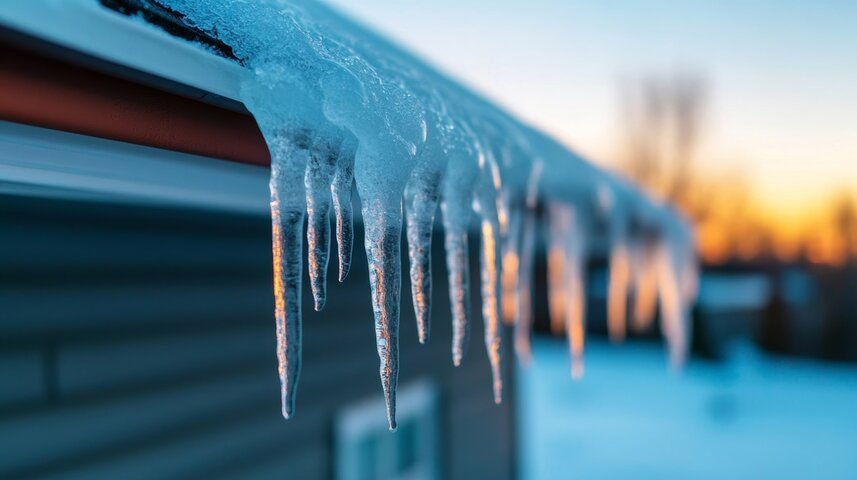
Ice dams are one of the most common winter-related causes of water damage in Colorado mountain homes. They form when heat from the attic melts snow on the roof, and the meltwater flows downward until it reaches the colder roof edge. There, it refreezes and forms a ridge of ice along the eaves.
As this ridge grows, it blocks additional meltwater from draining off the roof. The trapped water backs up under shingles and seeps into the home.
Ice dams frequently cause:
- Water intrusion into attic insulation
- Staining along exterior walls
- Damage to soffits and fascia
- Interior wall and ceiling leaks
- Mold growth inside wall cavities
Homes in Breckenridge and Frisco with complex rooflines are especially susceptible. Valleys and dormers create natural collection points for snow and ice, increasing the risk of water backup.
Ice dams are not just a nuisance. They can lead to significant structural and interior damage. When water enters through the roofline, it may travel down inside walls before becoming visible. This hidden migration often results in:
- Warped hardwood flooring
- Swollen trim and baseboards
- Insulation saturation
- Compromised drywall
- Electrical hazards from wet wiring
Preventing ice dams typically involves improving attic insulation and ventilation to maintain consistent roof temperatures. However, once water intrusion occurs, professional drying and restoration are essential.
Rocky Mountain Restore serves Summit County communities including Dillon, Silverthorne, and Keystone with responsive water damage mitigation services. Thorough moisture detection tools allow technicians to identify hidden wet areas behind walls and ceilings, helping prevent long-term mold or structural deterioration.
Freeze-Thaw Cycles That Crack Foundations
Mountain climates are known for dramatic temperature swings. A sunny afternoon in Vail or Breckenridge can bring melting snow, followed by freezing temperatures overnight. This repeated freeze-thaw cycle puts significant stress on building materials.
When snow melts around a property’s foundation, water seeps into small cracks and pores in concrete. As temperatures drop, that water freezes and expands. Expansion exerts pressure on the surrounding material, gradually widening cracks and allowing more water intrusion over time.
Foundation damage caused by freeze-thaw cycles often results in:
- Expanding cracks in basement walls
- Shifting or settling foundations
- Water seepage through hairline fractures
- Damage to exterior masonry
- Compromised structural integrity
For homes and commercial buildings in Summit County, foundation issues can lead to persistent basement moisture problems. Even minor cracks can allow snowmelt to infiltrate during warmer winter days.
Warning signs of freeze-thaw foundation damage include:
- Damp basement walls
- Efflorescence, a white powdery residue on concrete
- Musty odors in lower levels
- Uneven floors
- Water pooling near foundation walls
When water enters through foundation cracks, it creates ideal conditions for mold growth and material deterioration. Carpeting, drywall, and stored belongings in finished basements can quickly absorb moisture.
Rocky Mountain Restore works with property owners throughout Summit County, including areas such as Breckenridge 80424 and Silverthorne 80498, to mitigate water intrusion and restore affected materials. Rapid drying and structural repairs help limit long-term damage and secondary mold concerns.
Melting Snow Seeping Into Attics and Walls
Snow does not have to fall directly onto a roof to cause water damage. Wind-driven snow can infiltrate small openings in siding, attic vents, and soffits. Once temperatures rise, that trapped snow melts and seeps into insulation and wall cavities.
Attics are particularly vulnerable. In mountain homes throughout Frisco and Keystone, heavy snow combined with strong winds can push moisture into ridge vents and gable vents. When the snow melts, water saturates insulation and may drip onto ceilings below.
Common pathways for melting snow intrusion include:
- Gaps around attic vents
- Unsealed utility penetrations
- Cracks in exterior siding
- Improperly sealed window frames
- Damaged weather stripping
Once inside walls or attic spaces, moisture can remain undetected for extended periods. Insulation holds water, reducing energy efficiency and increasing the risk of mold growth. Over time, wood framing may weaken due to prolonged exposure.
Property owners should be alert to:
- Increased heating costs due to wet insulation
- Peeling paint near ceilings
- Musty smells in upper levels
- Visible mold growth in attic spaces
- Condensation buildup on windows
Professional moisture mapping is critical after suspected snow intrusion. Rocky Mountain Restore uses advanced drying equipment and monitoring tools to ensure hidden moisture is properly addressed. Serving residential and commercial properties across Summit County, their team focuses on preventing small leaks from becoming major restoration projects.
Blocked Drains and Flooded Basements in Winter
Winter water damage is not limited to roofs and walls. Snow and ice can block exterior drains, downspouts, and stormwater systems. When sudden thaws occur, meltwater has nowhere to go and may back up toward the building.
In communities like Dillon and Silverthorne, where snowbanks can accumulate along driveways and walkways, exterior drainage systems are often buried. If downspouts discharge too close to the foundation, water can pool and seep into basements.
Blocked drainage systems can result in:
- Basement flooding during rapid snowmelt
- Saturated crawl spaces
- Erosion around foundation walls
- Sewer line backups
- Damage to finished lower levels
Commercial properties face similar risks. Restaurants, retail spaces, and lodging facilities in Breckenridge and Vail may experience water intrusion through loading docks or below-grade entrances when drainage is obstructed.
Basement flooding often requires immediate action to prevent:
- Mold growth within 24 to 48 hours
- Electrical hazards
- Damage to HVAC systems
- Ruined flooring and drywall
- Loss of stored inventory or personal belongings
Rocky Mountain Restore provides water extraction, structural drying, and restoration services throughout Summit County and nearby mountain communities. Quick response helps minimize damage and supports a smoother insurance claims process for property owners.
Why Fast Water Damage Response Matters in Summit County
In high-altitude environments like Summit County, water damage can escalate quickly. Cold temperatures slow evaporation, meaning moisture lingers longer in building materials. What starts as a minor leak can become extensive damage if not addressed promptly.
Rapid response is essential because:
- Mold can begin developing within 24 to 48 hours
- Structural wood may weaken when saturated
- Insulation loses effectiveness when wet
- Secondary damage increases restoration costs
- Insurance claims become more complex over time
For homeowners in Breckenridge, Frisco, Keystone, Dillon, Silverthorne, and Vail, professional restoration ensures that moisture is thoroughly removed and affected materials are properly repaired or replaced.
Rocky Mountain Restore is based in Breckenridge and serves Summit County and surrounding Colorado mountain communities with comprehensive water damage restoration, fire and smoke cleanup, mold remediation, and insurance restoration services. Their team understands the unique challenges of mountain weather and construction styles, allowing for targeted solutions that address both immediate damage and underlying causes.
A professional water damage response typically includes:
- Detailed inspection and moisture detection
- Water extraction and controlled demolition if necessary
- Industrial drying and dehumidification
- Cleaning and sanitizing affected areas
- Restoration and reconstruction services
Working with experienced restoration professionals helps protect both residential and commercial properties from long-term structural issues and health risks associated with mold.
Frequently Asked Questions
How does snow cause water damage in mountain homes?
Snow causes water damage when it melts and seeps into vulnerable areas of a roof, foundation, or exterior walls. In mountain communities like Breckenridge and Frisco, prolonged snow accumulation increases the likelihood of leaks, ice dams, and hidden moisture intrusion. Rocky Mountain Restore serving Summit County and nearby communities provides inspections and restoration services to address snow-related water damage before it leads to larger structural or mold problems.
What are the signs of an ice dam causing interior damage?
Common signs include ceiling stains, peeling paint near rooflines, wet insulation in the attic, and water dripping during warmer daytime temperatures. Ice dams often force meltwater under shingles, allowing it to enter wall cavities. Rocky Mountain Restore serving Summit County can assess the extent of water intrusion, remove damaged materials, and thoroughly dry affected areas to prevent long-term issues.
Can freeze-thaw cycles really damage a foundation?
Yes, repeated freeze-thaw cycles can expand existing cracks in concrete foundations. As snowmelt enters small openings and refreezes overnight, it widens cracks and allows additional water intrusion. Over time, this process can lead to basement leaks and structural concerns. Rocky Mountain Restore works with property owners throughout Summit County to mitigate water damage and restore affected basement areas.
How quickly should water damage be addressed in winter?
Water damage should be addressed as soon as it is discovered, ideally within the first 24 to 48 hours. Even in cold climates like Summit County, indoor environments allow mold to begin developing rapidly. Rocky Mountain Restore offers responsive water damage mitigation services throughout Breckenridge, Dillon, Silverthorne, and surrounding communities to reduce secondary damage and protect property value.
Does homeowners insurance cover snow and ice water damage?
Coverage depends on the specific policy and cause of the damage. Many policies cover sudden and accidental water damage from ice dams or roof leaks but may not cover issues related to deferred maintenance. Rocky Mountain Restore serving Summit County works closely with property owners and insurance providers to document damage and support the claims process.
What should I do if my basement floods during snowmelt?
First, ensure safety by avoiding standing water near electrical outlets or appliances. Then contact a professional restoration company to assess and extract the water. Rocky Mountain Restore provides water extraction, drying, and restoration services across Summit County and nearby mountain communities to help minimize damage and prevent mold growth after basement flooding.
Can snow-related water damage lead to mold problems?
Yes, trapped moisture from roof leaks, ice dams, or foundation cracks can create ideal conditions for mold growth within walls and insulation. Mold can begin developing within 24 to 48 hours in damp environments. Rocky Mountain Restore offers mold remediation services in addition to water damage restoration to help ensure properties in Summit County are safe and healthy.
Do commercial properties face different winter water damage risks?
Commercial buildings in Breckenridge, Vail, and Silverthorne may have flat roofs, larger drainage systems, and higher occupancy demands, which can increase water damage risks during heavy snowfall. Blocked drains, roof ponding, and ice buildup can disrupt business operations. Rocky Mountain Restore provides commercial restoration services throughout Summit County to help businesses recover quickly and safely.