
Roof leaks often start small. A single missing shingle, cracked flashing, or ice dam may not seem urgent at first glance. However, in Colorado’s mountain climate, minor roofing issues can quickly escalate into extensive property damage. At Rocky Mountain Restore, based in Breckenridge and serving Summit County and surrounding communities including Silverthorne, Dillon, Frisco, Keystone, and Vail, we routinely see how overlooked roof leaks lead to major water damage in both residential and commercial buildings.
Understanding how roof leaks evolve helps property owners take proactive steps to prevent costly repairs. This guide explains how water travels through structures, why hidden moisture is so dangerous, how mold develops, and why fast restoration is essential in mountain environments.
Small Roof Leaks Can Cause Big Problems Over Time
A small roof leak rarely stays small for long. Even a slow drip can introduce gallons of water into your home or commercial building over weeks or months. Because roof leaks often begin in areas that are not immediately visible, such as attic spaces or beneath insulation, property owners may not realize there is a problem until significant damage has already occurred.
Water intrusion from the roof tends to follow gravity, but it can also travel horizontally along beams and insulation. By the time water stains appear on ceilings or walls, moisture may have already saturated framing materials. In mountain towns like Breckenridge and Frisco, where snow accumulation is heavy, repeated freeze-thaw cycles can widen small roof openings and accelerate the damage process.
Small leaks commonly originate from:
- Damaged or missing shingles
- Cracked flashing around chimneys and vents
- Ice dams along roof edges
- Improperly sealed skylights
- Aging roofing materials
Over time, even minor water intrusion can weaken wood decking, degrade insulation, and compromise drywall. What begins as a localized roofing issue can evolve into structural repairs, mold remediation, and extensive interior restoration.
In commercial properties across Silverthorne and Dillon, small leaks can also disrupt business operations. Ceiling tile damage, electrical risks, and slip hazards from dripping water can create liability concerns and lost revenue. Addressing roof leaks early is one of the most cost-effective ways to prevent large-scale restoration.
How Water Spreads Through Attics and Walls
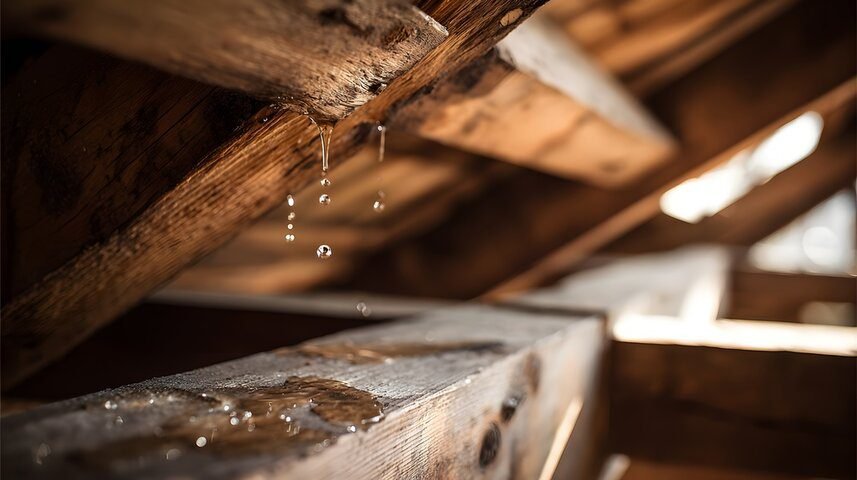
Once water penetrates the roofing system, it rarely stays in one place. Attics act like collection basins where water can pool on insulation, drip along rafters, and seep into wall cavities. Because many mountain homes have vaulted ceilings and complex rooflines, water migration can be unpredictable.
Water follows the path of least resistance. It can travel along:
- Roof decking and support beams
- Electrical wiring pathways
- HVAC ductwork
- Plumbing vent stacks
- Insulation layers
This lateral movement means the visible damage inside your home may not be directly below the original leak. For example, a roof leak near a chimney could result in staining several feet away on an interior wall in a Keystone home.
As insulation becomes saturated, it loses its effectiveness. Wet insulation compresses and traps moisture, creating an ideal environment for microbial growth. In cold climates like Summit County, this also reduces energy efficiency, leading to higher heating costs during winter months.
In commercial buildings throughout Vail and surrounding mountain communities, flat or low-slope roofing systems can allow water to spread even more extensively before detection. By the time ceiling panels show discoloration, water may have already compromised structural components or electrical systems above.
Professional water damage restoration teams use moisture mapping tools and thermal imaging to track how far water has traveled. Without thorough assessment, hidden moisture may remain behind walls or above ceilings, leading to ongoing deterioration long after the roof is repaired.
Hidden Moisture and Structural Damage Risks
One of the most serious consequences of roof leaks is hidden moisture. Water trapped inside walls, ceilings, and flooring materials continues to degrade building components long after surface areas appear dry. This concealed damage often leads to costly structural repairs if not properly addressed.
Wood framing absorbs moisture readily. Over time, repeated wetting weakens structural integrity and can lead to:
- Wood rot and decay
- Warping or bowing beams
- Nail and fastener corrosion
- Delamination of plywood
- Compromised load-bearing capacity
In mountain communities like Breckenridge and Silverthorne, heavy snow loads already place stress on roofing systems. When structural components are weakened by moisture, the risk increases during peak winter conditions.
Drywall is particularly vulnerable. Once saturated, it loses strength and may crumble or sag. Ceiling collapse becomes a real possibility when prolonged roof leaks go unaddressed. In commercial properties, this can create safety hazards for employees and customers.
Hidden moisture also affects subflooring and interior finishes. Hardwood flooring can cup or buckle, carpeting can harbor bacteria, and paint may blister or peel. Without professional drying equipment and moisture monitoring, trapped water may remain inside materials even after visible surfaces seem dry.
At Rocky Mountain Restore, serving Summit County and nearby mountain regions, our restoration process includes comprehensive moisture detection and structural drying. This ensures that water damage is fully addressed rather than simply covered up.
Mold Growth That Develops After Roof Leaks
Mold growth is one of the most concerning outcomes of roof leaks. In many cases, mold begins developing within 24 to 48 hours of water intrusion. Attics and wall cavities provide dark, humid environments where spores can thrive.
When insulation and wood framing remain damp, mold colonies can spread quickly. Common signs of mold after a roof leak include:
- Musty odors in upper levels of the home
- Dark staining on attic sheathing
- Discoloration on ceiling drywall
- Increased allergy or respiratory symptoms
- Visible growth around vents or light fixtures
In mountain homes across Dillon and Frisco, tightly sealed construction designed for energy efficiency can trap moisture indoors. Without proper ventilation, even small roof leaks create elevated humidity levels that accelerate mold growth.
Mold does not remain confined to the original leak area. Air circulation systems can distribute spores throughout the property, affecting multiple rooms. In commercial spaces, this may result in indoor air quality complaints and potential health concerns for occupants.
Professional mold remediation involves containment, air filtration, removal of affected materials, and antimicrobial treatments. Simply cleaning visible mold is not enough. Identifying and correcting the moisture source, including roof repairs, is essential to prevent recurrence.
Rocky Mountain Restore provides mold remediation services throughout Summit County, including Breckenridge 80424 and Silverthorne 80498, helping property owners restore safe indoor environments after water damage.
Why Mountain Weather Worsens Roof Damage
Colorado’s mountain climate creates unique challenges for roofing systems. Heavy snowfall, ice accumulation, high winds, and intense UV exposure all contribute to accelerated wear and tear.
Ice dams are especially problematic in Summit County communities. When snow melts and refreezes at roof edges, water can back up under shingles and penetrate the roof deck. This process repeats throughout winter, compounding water intrusion.
Mountain weather factors that increase roof leak risks include:
- Significant snow loads
- Frequent freeze-thaw cycles
- Wind-driven snow infiltration
- Rapid temperature fluctuations
- Hail and summer storms
High-altitude UV radiation can also degrade roofing materials more quickly than in lower elevations. Shingles may become brittle and crack, creating entry points for water.
In towns like Keystone and Vail, properties often feature complex rooflines with multiple valleys and dormers. These architectural elements add beauty but also increase the number of potential leak points.
Because of these environmental pressures, routine inspections and timely repairs are especially important in mountain communities. Even minor damage should be evaluated before the next snowstorm or heavy rain event.
When roof leaks occur during winter, water damage restoration becomes more urgent. Cold temperatures can slow natural drying, and trapped moisture may freeze inside materials, causing expansion and further cracking. Professional drying equipment and climate control help mitigate these risks.
The Importance of Fast Water Restoration
The longer water sits inside a structure, the more extensive the damage becomes. Immediate action following a roof leak can significantly reduce repair costs and prevent secondary issues like mold and structural deterioration.
Fast water restoration typically includes:
- Emergency water extraction
- Moisture detection and mapping
- Structural drying with air movers and dehumidifiers
- Removal of damaged materials
- Sanitization and odor control
In Summit County and surrounding mountain communities, quick response is especially critical during winter months when drying conditions are less favorable. Delays can allow moisture to penetrate deeper into framing and finishes.
For both residential and commercial property owners in Breckenridge, Silverthorne, Dillon, Frisco, Keystone, and nearby areas, professional restoration offers several advantages. It ensures that hidden moisture is identified, documentation is provided for insurance claims, and repairs are completed according to industry standards.
Rocky Mountain Restore works closely with homeowners, business owners, and insurance providers to streamline the restoration process. From initial assessment to final repairs, our goal is to restore properties safely, efficiently, and thoroughly.
Addressing a roof leak is not just about fixing shingles. It is about protecting the structural integrity, air quality, and long-term value of your property. When water damage occurs, professional restoration helps prevent a small roofing issue from becoming a major reconstruction project.
Frequently Asked Questions
How quickly can a roof leak cause serious water damage?
A roof leak can begin causing structural damage within days, especially in humid or cold mountain environments like Summit County. Mold growth may start within 24 to 48 hours if moisture remains trapped. Rocky Mountain Restore serving Breckenridge, Silverthorne, Dillon, and nearby communities recommends immediate inspection and drying to prevent escalating repairs.
Does homeowners insurance cover water damage from roof leaks?
Coverage depends on the cause of the leak and your specific policy. Sudden and accidental damage is often covered, while long-term neglect may not be. Rocky Mountain Restore works with property owners throughout Summit County to document water damage thoroughly and assist with insurance claims to help streamline the approval process.
What are the signs of hidden water damage from a roof leak?
Common signs include ceiling stains, peeling paint, musty odors, warped flooring, and increased indoor humidity. In many mountain homes, damage may remain hidden inside attics and wall cavities. Professional moisture detection services from Rocky Mountain Restore help identify concealed water damage before it leads to structural issues or mold growth.
Can roof leaks lead to mold problems in Colorado’s dry climate?
Yes. Even though Colorado has a relatively dry climate, roof leaks create localized moisture conditions ideal for mold growth. Attics and insulated wall spaces trap water, allowing mold to develop quickly. Rocky Mountain Restore provides mold remediation services across Summit County and surrounding mountain communities after water intrusion events.
How long does water damage restoration take after a roof leak?
The timeline varies depending on the extent of damage. Minor drying projects may take a few days, while extensive structural repairs and mold remediation can take several weeks. Rocky Mountain Restore assesses each property individually and provides clear timelines for homeowners and businesses in Breckenridge and nearby areas.
Is water damage restoration different for commercial properties?
Yes. Commercial buildings often have larger roofing systems, flat roofs, and complex mechanical systems that require specialized drying and repair strategies. Rocky Mountain Restore serves commercial properties throughout Summit County, offering comprehensive water damage restoration that minimizes operational disruptions.
What should I do immediately after discovering a roof leak?
First, protect interior belongings and contain dripping water if possible. Then contact a professional restoration company to assess the damage and begin drying. Rocky Mountain Restore responds to water damage calls throughout Summit County and nearby Colorado mountain communities to help prevent further structural and mold-related issues.
Can water damage from a roof leak affect my home’s structural integrity?
Absolutely. Prolonged moisture exposure weakens wood framing, corrodes fasteners, and deteriorates drywall and insulation. In mountain regions with heavy snow loads, compromised structural components pose additional risks. Rocky Mountain Restore provides thorough inspections and structural drying to help maintain building safety and stability.