Water damage in a commercial property is more than an inconvenience. It can disrupt operations, impact employee safety, damage inventory, and affect customer trust. In mountain communities like Breckenridge, Silverthorne, Dillon, Frisco, Keystone, and Vail, commercial water damage often comes with added complications such as freezing temperatures, snowmelt runoff, and high-altitude moisture patterns.
Rocky Mountain Restore, based in Breckenridge, Colorado, provides professional water damage restoration for businesses throughout Summit County and surrounding mountain communities. From retail stores and office buildings to hotels, restaurants, and multi-unit properties, the team understands how to respond quickly and restore operations safely. This guide explains how commercial properties handle water damage restoration, what business owners can expect, and how professional restoration services help protect both property and long-term profitability.
Rapid Emergency Response for Businesses
When water damage affects a commercial building, time is critical. A broken pipe, roof leak, appliance failure, or sewer backup can quickly saturate floors, walls, insulation, and equipment. In a busy business environment, every hour of delay increases the risk of structural damage, mold growth, and financial loss due to downtime.
In Summit County’s mountain climate, rapid response is especially important. Freezing temperatures can cause pipes to burst overnight, and heavy snowfall followed by rapid melting can overwhelm drainage systems. Rocky Mountain Restore provides responsive water damage restoration services throughout Breckenridge, Silverthorne, Dillon, Frisco, Keystone, and nearby mountain towns to help stabilize properties as soon as possible.
A professional emergency response typically includes:
- Immediate on-site evaluation and safety assessment
- Water source identification and shutoff coordination
- Temporary containment to prevent further spread
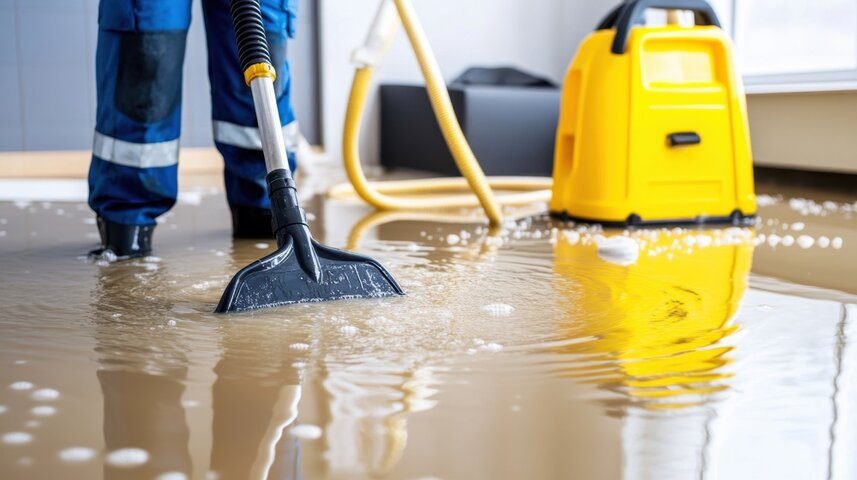
- Rapid extraction of standing water
- Protection of unaffected areas and critical assets
Commercial properties often require coordinated efforts to maintain partial operations while restoration begins. For example, a hotel in Vail may need affected guest rooms isolated while common areas remain open. A restaurant in Frisco may require water removal and drying in kitchen areas without disrupting critical systems.
Business owners can expect a structured emergency response plan that focuses on:
- Minimizing business interruption
- Protecting employees and customers
- Reducing long-term structural damage
- Preventing secondary issues such as mold
Fast action lays the foundation for a successful restoration process. The sooner water is removed and materials are stabilized, the more likely it is that repairs will be less invasive and more cost-effective.
Detailed Damage Assessment and Inspection
After the initial emergency response, the next step in commercial water damage restoration is a comprehensive inspection. This phase determines the extent of water intrusion, identifies affected materials, and guides the restoration strategy.
In mountain communities like Dillon and Silverthorne, buildings often have unique construction features designed for snow loads and cold weather insulation. These features can trap moisture behind walls or within ceiling cavities, making professional assessment critical. Surface-level dryness does not guarantee that hidden moisture is not present.
A thorough damage assessment typically involves:
- Moisture mapping using advanced detection tools
- Infrared thermal imaging to identify hidden water
- Inspection of structural components, insulation, and subflooring
- Evaluation of HVAC systems for contamination
- Classification of water type, such as clean, gray, or black water
Commercial properties are also evaluated for operational impact. Offices may have water-damaged wiring or data systems. Retail spaces may have compromised shelving or inventory. Industrial facilities may require specialized drying for machinery areas.
The assessment process helps determine:
- Which materials can be restored versus replaced
- The scope of demolition, if necessary
- The number and placement of drying units
- Expected timeline for restoration
Clear documentation during this phase is essential. Detailed records, photographs, and moisture readings are collected to support both the restoration plan and insurance claims. This structured approach ensures no hidden damage is overlooked and that restoration efforts are efficient and targeted.
Coordinating With Insurance Providers
Water damage restoration for commercial properties often involves complex insurance claims. Business interruption coverage, property damage policies, and equipment insurance may all come into play. Navigating these policies can be overwhelming for property managers and business owners already dealing with operational stress.
Rocky Mountain Restore works closely with insurance providers throughout Summit County and surrounding Colorado mountain communities. The goal is to streamline communication and ensure accurate documentation from the start.
Insurance coordination often includes:
- Detailed damage reports and photo documentation
- Moisture readings and equipment logs
- Line-item estimates for mitigation and repairs
- Direct communication with adjusters
- Support for business interruption documentation
Commercial claims differ from residential claims in scale and complexity. For example, a hotel in Breckenridge may need to document lost bookings, while a retail store in Keystone may need to account for damaged inventory. Accurate reporting helps prevent delays and misunderstandings.
Business owners benefit from a restoration partner that:
- Understands commercial policy structures
- Communicates clearly with adjusters
- Provides transparent estimates
- Maintains thorough project documentation
While no two claims are identical, having a restoration team experienced in both water damage mitigation and insurance restoration services can significantly reduce administrative burden. This allows business owners to focus on keeping operations running while the restoration process moves forward.
Advanced Water Extraction and Drying
Water extraction and structural drying are the core components of commercial water damage restoration. Removing visible water is only the first step. Moisture can remain trapped within subfloors, drywall, concrete, insulation, and framing materials.
In high-altitude mountain communities like Frisco and Vail, lower air pressure and fluctuating temperatures can affect evaporation rates. Professional-grade drying equipment is necessary to control humidity and accelerate moisture removal.
The water extraction and drying process may include:
- High-capacity truck-mounted extraction systems
- Industrial air movers and dehumidifiers
- Low-grain refrigerant or desiccant dehumidifiers
- Targeted cavity drying systems
- Continuous moisture monitoring and adjustments
Commercial buildings often require large-scale drying plans. Open floor plans, high ceilings, and complex layouts demand strategic equipment placement to ensure consistent airflow and humidity control.
During the drying phase, restoration professionals:
- Monitor moisture levels daily
- Adjust equipment placement as conditions change
- Remove and replace irreparably damaged materials
- Ensure safe electrical operation in affected areas
Effective drying prevents secondary damage such as warping, swelling, corrosion, and microbial growth. For businesses in Silverthorne and Dillon, where winter conditions can complicate ventilation, controlled drying environments are especially important.
This phase may last several days depending on the extent of damage. Patience and precision are critical. Rushing the process can leave residual moisture behind, increasing the risk of mold or long-term structural issues.
Mold Prevention in Mountain Climates
Mold growth is one of the most significant risks following commercial water damage. In many cases, mold can begin developing within 24 to 48 hours in damp conditions. In mountain climates, where snowmelt and humidity fluctuations are common, the risk can be amplified.
Commercial properties such as hotels, condominiums, restaurants, and office buildings in Summit County face unique moisture challenges. Insulated wall cavities, crawl spaces, and attic areas can retain hidden moisture long after visible water is removed.
Mold prevention strategies during restoration include:
- Rapid water extraction and structural drying
- Antimicrobial treatments on affected surfaces
- Removal of contaminated porous materials
- HEPA air filtration during mitigation
- Controlled containment to prevent cross-contamination
If mold is already present, professional mold remediation may be required. This involves isolating affected areas, safely removing contaminated materials, and cleaning remaining surfaces according to industry standards.
Business owners should watch for:
- Musty odors
- Discoloration on walls or ceilings
- Increased allergy symptoms among occupants
- Recurring moisture issues
Proactive mold prevention protects indoor air quality and reduces liability concerns. In commercial settings where employees and customers occupy the space daily, maintaining a healthy environment is essential. A comprehensive restoration plan in mountain communities must always account for long-term moisture control.
Full Restoration and Business Recovery
Water damage restoration does not end when the property is dry. The final phase involves repairing and rebuilding affected areas to return the commercial property to its pre-loss condition. For many businesses, this stage represents the path back to full operational stability.
Full restoration services may include:
- Drywall repair and painting
- Flooring replacement or refinishing
- Ceiling tile and insulation replacement
- Cabinetry and fixture repair
- Electrical and plumbing system restoration
In commercial properties, timelines matter. A retail store in Breckenridge may need to reopen before peak tourist season. A restaurant in Keystone may need expedited repairs before a major event. Coordinated project management helps prioritize critical areas while maintaining safety standards.
A structured restoration plan supports:
- Efficient scheduling of trades and inspections
- Clear communication with business owners
- Compliance with local building codes
- Quality control and final walkthroughs
Rocky Mountain Restore, serving Summit County and nearby communities, approaches commercial water damage restoration with both technical expertise and an understanding of local business needs. From initial mitigation to final repairs, the goal is to restore not just the building but the functionality and confidence of the business itself.
Commercial water damage can feel overwhelming, but a professional, step-by-step approach makes recovery manageable. Rapid response, thorough assessment, advanced drying, mold prevention, insurance coordination, and complete restoration work together to protect investments and support long-term resilience in Colorado’s mountain communities.
Frequently Asked Questions
How quickly should a commercial property address water damage?
Commercial water damage should be addressed immediately, ideally within the first 24 hours. Delays can lead to structural deterioration, mold growth, and extended business interruption. Rocky Mountain Restore serving Summit County and nearby mountain communities provides responsive water damage restoration services to help stabilize commercial properties quickly and reduce long-term impact.
What types of businesses need professional water damage restoration?
Any commercial property can require professional restoration, including hotels, retail stores, offices, restaurants, medical facilities, and multi-unit buildings. In Breckenridge, Silverthorne, Dillon, Frisco, Keystone, and Vail, businesses face added risks from frozen pipes and snowmelt. Professional mitigation ensures proper drying, sanitation, and structural protection.
Will insurance cover commercial water damage restoration?
Coverage depends on the specific policy and cause of loss. Many commercial property insurance policies cover sudden and accidental water damage but may exclude certain situations like long-term leaks. Rocky Mountain Restore works with business owners and insurance providers throughout Summit County to document damage thoroughly and support the claims process.
How long does commercial water damage restoration take?
The timeline varies based on the extent of damage, building size, and materials affected. Initial mitigation and drying may take several days, while full restoration can take weeks. A professional restoration team serving Colorado mountain communities provides a clear project timeline after a detailed assessment and keeps business owners informed throughout the process.
Can water damage cause mold in mountain climates?
Yes, mold can develop quickly after water intrusion, especially in insulated or poorly ventilated areas common in mountain buildings. Fluctuating temperatures and trapped moisture increase the risk. Professional drying, antimicrobial treatments, and moisture monitoring help prevent mold growth in commercial properties across Summit County.
What is the difference between water mitigation and restoration?
Water mitigation focuses on stopping the damage and drying the property, including extraction and moisture control. Restoration involves repairing and rebuilding damaged materials to return the property to its pre-loss condition. Rocky Mountain Restore provides both mitigation and full restoration services for businesses in Breckenridge and surrounding areas.
Do businesses need to close during water damage restoration?
Not always. Some commercial properties can remain partially operational if affected areas are safely contained. Restoration professionals create strategic plans to isolate damaged sections while protecting employees and customers. Each situation is evaluated individually to balance safety, efficiency, and business continuity.
Does Rocky Mountain Restore handle residential and commercial damage?
Yes. Rocky Mountain Restore is based in Breckenridge, Colorado and serves both residential and commercial clients throughout Summit County and nearby mountain communities. Services include water damage restoration, fire and smoke damage cleanup, mold remediation, and insurance restoration support tailored to local climate conditions.
{
  "@context": "https://schema.org",
  "@type": "FAQPage",
  "mainEntity": [
    {
      "@type": "Question",
      "name": "How quickly should a commercial property address water damage?",
      "acceptedAnswer": {
        "@type": "Answer",
        "text": "Commercial water damage should be addressed immediately, ideally within the first 24 hours. Delays can lead to structural deterioration, mold growth, and extended business interruption. Rocky Mountain Restore serving Summit County and nearby mountain communities provides responsive water damage restoration services to help stabilize commercial properties quickly and reduce long-term impact."
      }
    },
    {
      "@type": "Question",
      "name": "What types of businesses need professional water damage restoration?",
      "acceptedAnswer": {
        "@type": "Answer",
        "text": "Any commercial property can require professional restoration, including hotels, retail stores, offices, restaurants, medical facilities, and multi-unit buildings. In Breckenridge, Silverthorne, Dillon, Frisco, Keystone, and Vail, businesses face added risks from frozen pipes and snowmelt. Professional mitigation ensures proper drying, sanitation, and structural protection."
      }
    },
    {
      "@type": "Question",
      "name": "Will insurance cover commercial water damage restoration?",
      "acceptedAnswer": {
        "@type": "Answer",
        "text": "Coverage depends on the specific policy and cause of loss. Many commercial property insurance policies cover sudden and accidental water damage but may exclude certain situations like long-term leaks. Rocky Mountain Restore works with business owners and insurance providers throughout Summit County to document damage thoroughly and support the claims process."
      }
    },
    {
      "@type": "Question",
      "name": "How long does commercial water damage restoration take?",
      "acceptedAnswer": {
        "@type": "Answer",
        "text": "The timeline varies based on the extent of damage, building size, and materials affected. Initial mitigation and drying may take several days, while full restoration can take weeks. A professional restoration team serving Colorado mountain communities provides a clear project timeline after a detailed assessment and keeps business owners informed throughout the process."
      }
    },
    {
      "@type": "Question",
      "name": "Can water damage cause mold in mountain climates?",
      "acceptedAnswer": {
        "@type": "Answer",
        "text": "Yes, mold can develop quickly after water intrusion, especially in insulated or poorly ventilated areas common in mountain buildings. Fluctuating temperatures and trapped moisture increase the risk. Professional drying, antimicrobial treatments, and moisture monitoring help prevent mold growth in commercial properties across Summit County."
      }
    },
    {
      "@type": "Question",
      "name": "What is the difference between water mitigation and restoration?",
      "acceptedAnswer": {
        "@type": "Answer",
        "text": "Water mitigation focuses on stopping the damage and drying the property, including extraction and moisture control. Restoration involves repairing and rebuilding damaged materials to return the property to its pre-loss condition. Rocky Mountain Restore provides both mitigation and full restoration services for businesses in Breckenridge and surrounding areas."
      }
    },
    {
      "@type": "Question",
      "name": "Do businesses need to close during water damage restoration?",
      "acceptedAnswer": {
        "@type": "Answer",
        "text": "Not always. Some commercial properties can remain partially operational if affected areas are safely contained. Restoration professionals create strategic plans to isolate damaged sections while protecting employees and customers. Each situation is evaluated individually to balance safety, efficiency, and business continuity."
      }
    },
    {
      "@type": "Question",
      "name": "Does Rocky Mountain Restore handle residential and commercial damage?",
      "acceptedAnswer": {
        "@type": "Answer",
        "text": "Yes. Rocky Mountain Restore is based in Breckenridge, Colorado and serves both residential and commercial clients throughout Summit County and nearby mountain communities. Services include water damage restoration, fire and smoke damage cleanup, mold remediation, and insurance restoration support tailored to local climate conditions."
      }
    }
  ]
}